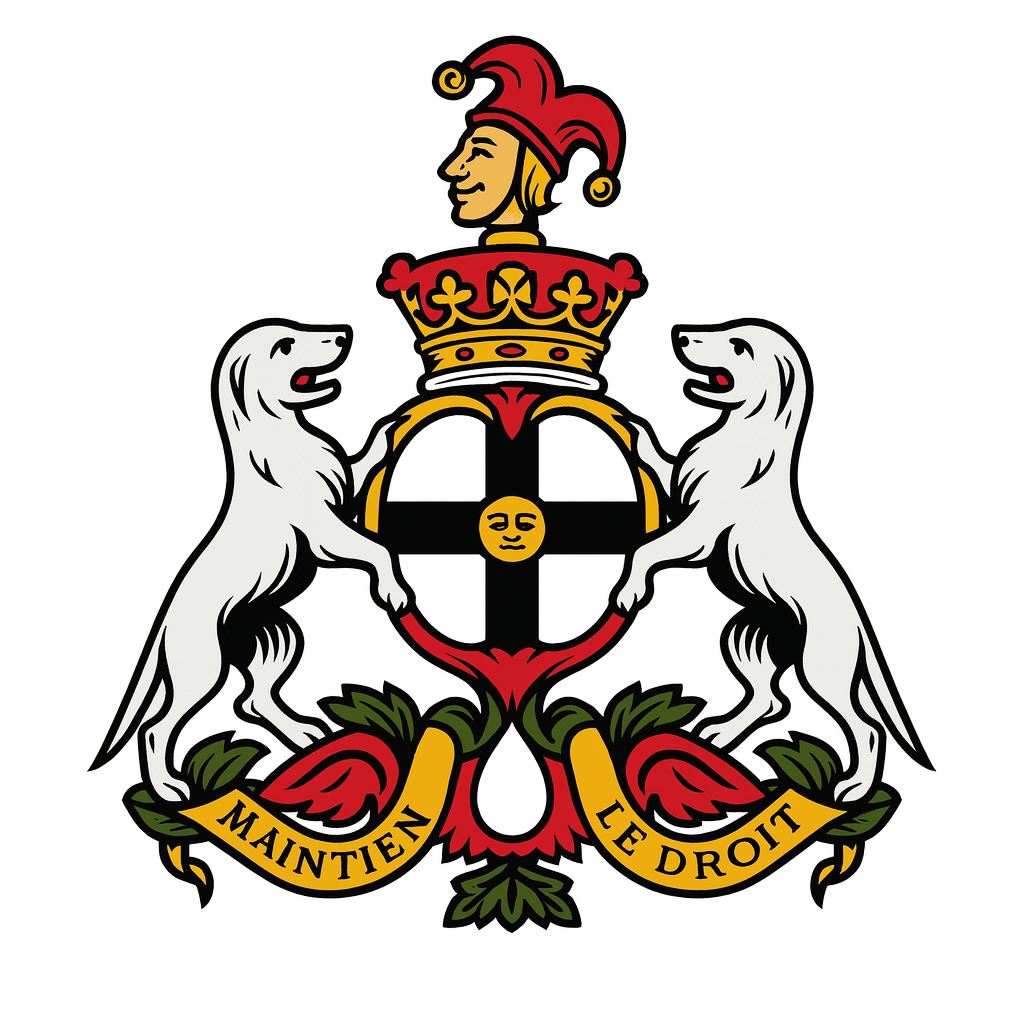
The short-Story Behind the Chandos Arms
The Chandos Arms is a public house near the centre of Oakley village, Buckinghamshire, on The Turnpike at number 8, set back behind the pub garden and car park. Postcode: HP18 9QB.
The Three Horseshoes / Chandos Arms building was built in the early 18th century, around 1725. The pub was originally the middle cottage of a terrace of three cottages, with the middle section thatched on the roadside—still the case today.
In the 1821 Enclosure, the pub was still called the Three Horseshoes and the proprietor was John Brooks.
On 8th February 1831, James Parsons bought the Three Horseshoes for £185 (the original text also provides a modern equivalent). The pub was renamed The Chandos Arms around 1836/7, and the first recorded use of the name in Oakley is stated as 1837.
The original text includes a reference from the Oxford Journal dated Saturday 11th November 1837, which refers to the Chandos Arms, Oakley, as the venue for an auction sale.
James Parsons died on 19th October 1863, and his estate passed to his wife Amelia.
The Aylesbury Brewery Company (A.B.C.) acquired the Chandos Arms in 1891. The Chandos remained under A.B.C. until A.B.C. was acquired by Allied Breweries Ltd in 1973, later forming part of Carlsberg-Tetley (as stated in the original text).
On 26th February 1985, the Chandos Arms was listed as a Grade II building. The listing describes an early 18th-century pub extended in the early 19th century, with a thatched roof, casements, a porch, and later extensions in brick and rubble stone.
In 2000, the remaining pub estate referenced in the text was sold to Punch Taverns.
The Royal Oak was de-licensed on 30th June 2011, leaving the Chandos Arms as the sole pub in Oakley.
The original text notes various operational changes and community actions in the 2010s and 2020s, including:
- a short period of management by Healy Management Group (2012)
- leasing arrangements via Phoenix Pubs group (2013–2015)
- community asset registration (2013; later not renewed)
- notice of intention to apply for planning permission to decommission as a public house (6 April 2021)
- purchase by Oakley Parish Council (24 September 2021) using a Public Works Loan
From the Three Horseshoes to the Chandos Arms
The story & people Behind the Chandos Arms
The original name of the Chandos Arms in Oakley was The Three Horseshoes.
The Three Horseshoes is recorded as the 42nd most common pub name in England, with around 100 pubs using that name. The pub sign for The Three Horseshoes is traditionally that of the Worshipful Company of Farriers’ coat of arms, which dates back to 1356. It depicts three horseshoes to illustrate their trade. Whenever a pub takes the name “The Three Horseshoes”, it is often an indicator that a blacksmith or farrier was not far away.
But why three shoes and not four? The explanation is practical: a horse would stand on three of its shoes while the farrier was fitting the fourth.
The horseshoe sign also frequently indicated that part of the building may once have been used as a smithy. At a fair number of pubs, the earliest licensees were also blacksmiths. One reason for this was that many pubs were historically inns, built on turnpikes or highways. Many customers were travelling through with a horse or carriage, and sometimes needed the services of a farrier.
Most “Horseshoe” pubs use a simple visual sign. However, the sign carries extra meaning because of the long-held tradition that a horseshoe is lucky. The horseshoe was once thought to protect against witches. Traditionally, it is important for the ends of the shoe to face upwards, so the “luck” does not run out.
Who (or what) was Chandos?
Why were there several public houses in Buckinghamshire, including Oakley, called The Chandos Arms (or The Chandos)?
The most likely reason is that the name refers to Richard Temple-Nugent-Brydges-Chandos-Grenville, who became 2nd Duke of Buckingham and Chandos when his father died in 1839. He was Marquess of Chandos between 1822 and 1839, and was often referred to simply as “Chandos”.
The Chandos family owned much land locally and across Buckinghamshire. Chandos was also Member of Parliament for Buckinghamshire from 1818 to 1839.
He introduced the ‘Chandos Clause’ to the 1832 Reform Bill, by which occupiers of lands and tenements at a rent of £50 a year (equivalent to £4,700 in 2020) became entitled to vote for Knights of the Shire. He championed the people working the land, who at that time were suffering greatly, and acquired the epithet “farmer’s friend”.
So why was Oakley’s pub name changed?
James Parsons lived in the High Street in Brill. Born around 1797, he was a farmer, brewer, maltster and property owner. In 1829, James Parsons, who owned Brill Brewery, provided a loan to John Brooks, landlord of the Three Horseshoes, Oakley.
On 8th February 1831, The Three Horseshoes, Oakley was for sale (with its brewhouse) and was bought for £185 by James Parsons of Brill. The landlord was now James Brooks, nephew of John Brooks (the landlord in 1829).
James Parsons and Chandos (the future 2nd Duke) would have known each other since both owned land and property locally. Parsons owned property in Brill and Oakley. Chandos owned an estate in Brill, and his father (the 1st Duke of Buckingham) had land in Oakley. Parsons would likely have benefited from his knowing Chandos, and from Chandos’s political influence.
Between 1835 and 1839, bad winters and poor summers contributed to poor harvests. In addition, the Enclosure Acts, the Tithe Commutation Act (1836), and the Poor Laws meant rural landowners and farmers were struggling.
In February 1836, Chandos obtained a Select Committee of the House of Commons “for the consideration of the grievances and depressed state of agriculturalists”. As a result, he was known as the “farmer’s friend”—another reason for a good working relationship between Parsons and Chandos.
In 1837, James Parsons was listed on the Electoral Register for Brill. The nature of his qualification as a voter was “renter of land £50 and upwards”. As an occupier of land at a rent over £50 a year, Parsons benefited from the Chandos Clause and was entitled to vote as a result. However, in that era, voters were often expected to vote the way they were told by their landlord—this was how society tended to work at the time.
There is no definitive evidence of exactly when Parsons renamed the Three Horseshoes as The Chandos Arms, but he would have had reasons to demonstrate gratitude or allegiance—favours were made and favours were called in.
By 1838, Parsons still owned the pub (now called The Chandos Arms) and Edward Walker was the landlord.
Also in 1838, Parsons was still living at Leatherslade, but his voter qualification had changed—he was now an owner/occupier, no longer renting.
Both James Parsons and the Marquess of Chandos were present at a meeting to form the Brill Conservative Association on 8th September 1838. At that meeting it was proposed (by Mr Hudson of Manor Farm, Oakley) and seconded by Mr Parsons that the Marquess of Chandos be requested to become President of the association—evidence that the two men were well acquainted.
Richard Temple-Nugent-Brydges-Chandos-Grenville
2nd Duke of Buckingham and Chandos (1797–1861)
Richard Plantagenet Temple-Nugent-Brydges-Chandos-Grenville, KG, GCH, PC, FSA, was born at Stowe, Buckinghamshire in 1797 and died on 29th July 1861.
He was the son of Richard Nugent-Temple-Grenville, Earl Temple (later created the 1st Duke of Buckingham and Chandos) and Lady Anne Brydges, the only surviving child of the 3rd Duke of Chandos. Lady Anne was, in her own right (suo jure), Lady Kinloss.
The 2nd Duke was a paternal grandson of the 1st Marquess of Buckingham and a great-grandson of Prime Minister George Grenville. He was styled Viscount Cobham from birth until 1813.
He was Earl Temple between 1813 and 1822. In 1813, he was proprietor of an estate in Brill (and Tattenhoe). He was educated at Eton and Oriel College, Oxford.
He was a British Tory politician and sat as MP for Buckinghamshire from 1818 to 1839. In 1832, during the passage of the Reform Bill, he introduced the Chandos Clause, which enfranchised occupiers of lands and tenements at a rent of £50 a year. The clause was adopted despite opposition from the Government. Tenants-at-will thereby enfranchised often voted as instructed by their landlords, who typically supported the Tory party.
In February 1836, as Marquess of Chandos, he obtained the Select Committee “for the consideration of the grievances and depressed state of agriculturalists” and perhaps his proudest informal title was “farmer’s friend”.
In 1819, he married Lady Mary Campbell, daughter of Lieutenant-General the 4th Earl of Breadalbane (later created Marquess of Breadalbane). They had one son (Richard, 3rd Duke) and one daughter (Lady Anna).
He became Marquess of Chandos between 1822 and 1839. He was appointed a Knight Grand Cross of the Royal Hanoverian Order in 1835. When he succeeded his father in 1839, he entered the House of Lords.
He was elected a Fellow of the Society of Antiquaries in 1840. In September 1841, he was sworn of the Privy Council and appointed Lord Privy Seal by Sir Robert Peel, holding the post until February 1842. He was made a Knight of the Garter in 1842.
In 1847, eight years after succeeding as Duke, he was declared bankrupt with debts over a million pounds (given in the original text as £93.4 million as of 2022). This led to the sale of estates including Keynsham (Somerset), Avington Park, and the auction sale of the contents of Stowe House in August–September 1848, one of the most prominent country-house contents auctions of the 19th century.
Remarkably for the era and his status, he became the first person to obtain a divorce in 1850, at a time when divorce required an Act of Parliament.
He died at the Great Western Hotel, Paddington, London, in July 1861, aged 64, and was succeeded by his only son. His former wife died less than a year later, in June 1862, aged 66.
Richard Temple-Nugent-Brydges-Chandos-Grenville
1st Duke of Buckingham and Chandos (1776–1839)
Richard Temple-Nugent-Brydges-Chandos-Grenville lived from 1776 to 1839. He was born Richard Temple-Nugent-Grenville, the eldest son of George Nugent-Temple-Grenville, 1st Marquess of Buckingham, and a descendant of Prime Minister George Grenville.
In April 1796, aged 20, the then Earl Temple married Lady Anne Brydges, daughter and sole heir of James Brydges, 3rd Duke of Chandos. By Royal licence of 15th November 1799, he added Brydges and Chandos to the family names, resulting in the famous multi-barrelled surname.
Earl Temple was elected (unopposed) MP for Buckinghamshire in a by-election on 30th June 1797. He later held senior militia and county roles and became a Privy Counsellor in 1806, serving as Vice-President of the Board of Trade and Joint Paymaster of the Forces until 1807.
He left the House of Commons in 1813 when he succeeded his father in the marquessate, becoming Marquess of Buckingham until 1822. He was also Lord-Lieutenant of Buckinghamshire from 1813 to 1839.
In 1813, the Marquess owned estates across the county, including property at Oakley, alongside many other Buckinghamshire locations. He was appointed a Knight of the Garter on 7th June 1820.
On 4th February 1822, he was honoured when he was created Earl Temple of Stowe, Marquess of Chandos, and Duke of Buckingham and Chandos—noted in the original text as the only person elevated to ducal rank by George IV. (The original text also notes Temple Street in Brill was named after Earl Temple.)
In 1827, he faced financial difficulty, partly due to major spending on art and literature and entertaining the royal family of France, and went abroad for around two years.
He died at Stowe on 17th January 1839, aged 62, and was buried in the mausoleum at Wotton. He was succeeded by his son, the 2nd Duke.
chandos around the UK
Citing pubnames.co.uk in 2022, there were three pubs in England called Chandos Arms and one called Chandos. However, “Chandos (Arms)” was a fairly common name of Buckinghamshire pubs in the mid to late 19th century, including references to:
- Aylesbury (High Street)
- Brill (Windmill Street)
- Buckingham
- Long Crendon (later the Gurkha Tavern; closed)
- Oakley (The Turnpike)
- Waddesdon (later the Barley Mow)
- Weston Turville
- Winslow (destroyed in 1947 when a Wellington Bomber crashed; never rebuilt)
- Whitchurch (now residential)
- Adstock, Bletchley
By 2010, there were only two remaining Chandos Arms in Buckinghamshire: Oakley and Weston Turville.